Simple, real-life ideas for turning your bedroom into a cozy retreat filled with the warmth of home, dried flowers, and chunky knit blankets, a place to truly unwind at the end of the day.
There’s something magical about walking into a room and instantly feeling at home. The kind of space that makes you want to kick off your shoes, wrap yourself in a blanket, and stay for hours. For a long time, my bedroom was the exact opposite.
It was more of a hallway than a sanctuary. The chair in the corner had a mountain of clean laundry that never made it to the closet, my laptop sat on the nightstand like a glowing reminder of my to-do list, and the overhead light was so harsh and white it felt more like a doctor’s office than a bedroom.
If you’ve been missing that cozy nest feeling in your own room, stick around. Grab a cup of tea while I walk you through everything I’ve learned, tried, and changed to turn a cold, personality-free space into my favorite corner of the house.

Images in this post were created for illustrative purposes
This post contains affiliate links, please see the disclosure
Why Your Bedroom Has Such a Big Impact on How You Feel
Days fly by. Emails, screens, errands, phone notifications… By the time night rolls around, your brain is begging for a little quiet, and the bedroom should be where that quiet happens.
Still, most of us neglect it. Since we sleep with our eyes closed, we assume it doesn’t matter what it looks like. But it absolutely does. The atmosphere around you when you fall asleep and when you wake up sets the tone for your rest, and for your whole day.
The Noise You Can’t Hear
A cluttered or cold-looking room keeps “talking” to your brain even when you’re trying to relax. We’re hardwired to take in our surroundings, and every out-of-place item, every clashing color, every pile of homeless laundry registers as something that still needs dealing with.
But when you walk into a room with soft tones, fabrics you want to reach out and touch, and warm, low lighting, your body gets the message right away: you can relax now. It’s often called sleep hygiene, and it doesn’t start when you climb into bed. It starts the moment you walk through the door.
Back to the Nest
Over the years, I’ve realized that a cozy bedroom isn’t about following trends or buying furniture so expensive you’re afraid to use it. It’s about listening to what you actually need to feel comfortable.
Humans have always craved small, sheltered spaces to rest in. That’s why huge, empty rooms with sky-high ceilings can feel a little stark. The cottage style gets this perfectly. It’s all about building a nest through small details, natural materials, and soft lighting.
First Things First: Make Some Room
Before you even think about floral wallpaper or fabric-shaded lamps, it’s time to roll up your sleeves. I’m speaking from experience here. The prettiest patchwork quilt in the world loses all its charm when it’s surrounded by junk.
A cozy bedroom can absolutely be full of details, but each one needs its place. For the room to breathe, you have to clear out what doesn’t belong first.
How to Declutter Without Feeling Overwhelmed
I used to be the kind of person who kept everything “just in case.” Old concert tickets, skincare that didn’t work for me, an itchy sweater I couldn’t bring myself to toss because it was a gift… Until I noticed all that stuff was taking up space in my head, too.
My approach is simple. Pick a morning when you have some energy, put on music you love, and bring a couple of bags or baskets to the bedroom. Start with what’s visible: the nightstands, the top of the dresser, and that chair that’s been doubling as a coat rack.
Pick up each item and ask yourself whether it truly belongs in the bedroom. This room is for rest, getting dressed, and intimacy. Anything that doesn’t fit those purposes goes somewhere else. Work papers, bills, the stationary bike that’s become a drying rack, books you’ve already read gathering dust… You don’t have to throw it all away, just find it a more logical spot in the house.
Clear Surfaces, Clear Mind
Once you’ve removed what doesn’t belong, keep only the useful and the beautiful in sight.
On your nightstand, for example, all you really need is a small lamp, whatever book you’re reading, a glass of water, and maybe a little vase with a garden flower or a dried sprig. Hand cream, earplugs, your charger. Those are better off inside a drawer.
Walking in and seeing clean surfaces gives you this huge sense of relief, as if the room itself is breathing deeper. That visual calm is the foundation for everything else we’re about to build.
The Color Palette: Shades That Bring Peace
If I had to pick just one element that turns a room into a retreat, it would be color, because it directly influences how we feel.
Walls painted a super bright, almost blinding white tend to make a room feel more clinical than homey.
A Warm, Natural Base
For that enveloping atmosphere we’re going for, the best bet is a palette that echoes the countryside and the earth: cream, linen, sand, oat, stone, or a warm-toned gray if you prefer something more understated.
I had my room painted white for years because I thought it would brighten things up. It did, but it was a cold kind of brightness that never felt inviting. The day I repainted the walls a soft, warm sand tone, I noticed the difference that very afternoon. Sunlight stopped bouncing harshly off everything and started pouring in golden and gentle.
These tones wrap the space around you, making the walls feel a little closer, and they go with absolutely everything, which makes them the perfect canvas for turning your bedroom into a retreat.
Pops of Color Without Losing the Calm
A neutral base doesn’t mean a boring room. Actually, it gives you the freedom to play around, swap out small details, and adapt the space to each season.
The secret is in dusty, washed-out shades, the kind that look like they’ve spent too many summers in the sun. Sage green, blush pink, soft terracotta, blue-gray, or a muted mustard yellow. These are sunset-garden colors.
Use them in small doses. If your walls, wardrobe, and bed are neutral, bring that sage green into a few throw pillows, the blanket at the foot of the bed, the mat on a botanical print, or a ceramic vase on the dresser. If you ever get tired of it, just swap out the covers and you’ve got a whole new room for almost nothing.
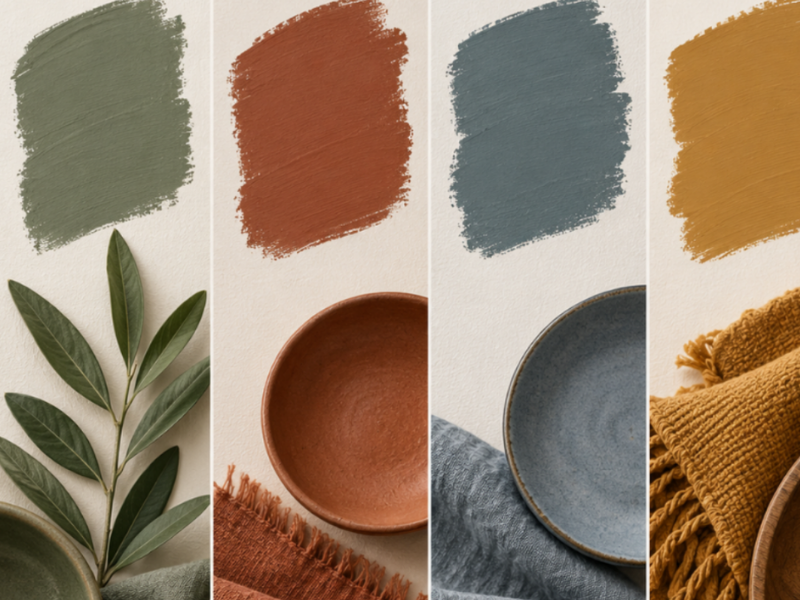
Color options for transforming your bedroom
Textiles: What Gives a Room Its Soul
With the space cleared out and your palette chosen, we’ve reached my favorite part, the one that transforms a bedroom the most.
You can have the most gorgeous furniture in the world, but if the fabrics fall flat, the room will feel like a showroom. The textiles are what bring in texture, warmth, and that soft, plush feeling we associate with a country cottage.
Layering the Bed
One of the best decisions I ever made was to stop seeing my bed as just a mattress with a tight-fitted sheet and a flat duvet. A cozy bed is one that looks inviting the moment you see it, and the secret is all about layering with intention to create volume.
Start with the sheets, because that’s what touches your skin. Washed linen is my absolute favorite because it breathes, stays cool in summer, keeps you warm when it gets chilly, and its natural wrinkles take all the stiffness out of the room. If you prefer a smoother feel, look for quality cotton like percale or cotton sateen.
Next comes the duvet or comforter, the star of the show. Pick a fill that’s light but fluffy, the kind that looks like a cloud, and a solid cover in your palette tones. If you want an extra cozy touch, a quilted or patchwork spread draped on top is pure poetry.
The finishing touch: a chunky knit throw, in soft wool or with lots of texture, at the foot of the bed. Don’t fold it perfectly. Let it fall naturally, as if someone just got up. It’ll keep you warm on cool nights and break up the uniformity of the duvet.
Throw Pillows, But Not Too Many
When it comes to throw pillows, there are two extremes. People who pile on so many they don’t know where to put them at night, and people who skip them entirely. I go for the middle ground, which also means bedtime doesn’t feel like a workout.
A pair of large euro shams against the headboard, your everyday pillows in front, and one smaller rectangular cushion at the very front is more than enough. The trick is mixing textures, so if your duvet is smooth linen, try pillows in a small floral print, soft gingham, cotton velvet or fine wool. That contrast makes the bed look rich without needing bold colors.
Rugs for Bare Feet
Few things shatter a peaceful morning quite like stepping onto a cold floor. A good rug brings warmth, muffles noise, and makes the whole room feel softer.
You can go with a large one that peeks out from the sides and foot of the bed, or two runners, one on each side. Jute and sisal look gorgeous and very natural, though they’re not the softest underfoot. If you want maximum comfort, a short-pile wool rug or a washable cotton one in neutral tones will be your best friend, and there are some beautiful ones in every color imaginable. If you come across a handmade rag rug or a hand-knotted one, don’t let it get away.
Curtains That Filter the Light
A bare window makes any room feel unfinished. Curtains don’t just give you privacy. They soften hard lines and dress the whole room.
Stay away from heavy, dark fabrics that make the space feel smaller. Go for lightweight fabrics that reach all the way to the floor, or even puddle a little, for a more relaxed vibe. A linen-cotton blend has a gorgeous drape and creates soft ripples. It lets daylight through but filters it so it comes in gentle.
A sheer panel with lace or embroidery is a cozy little detail that I personally love.

Lighting: The Best-Kept Secret of a Restful Room
The most common mistake is relying on a single overhead light in the center of the ceiling. That flat, top-down light that illuminates everything equally is the enemy of rest.
Think about the places where you truly relax. None of them have a bright spotlight aimed right at your head. In a cozy bedroom, lighting is warm, indirect, and spread across several sources.
Ditch the Interrogation Lighting
I had a gorgeous ceiling fixture with a bright white bulb so I could see myself clearly when getting dressed. The problem was that turning it on at night woke me right up.
Cool, intense light suppresses melatonin, the hormone that helps you fall asleep, so the first step is swapping out your bulbs. Look for ones labeled warm white, 2700K or lower. That’s the tone that feels like sunset or firelight, and it tells your body the day is over.
Three Pockets of Soft Light
Instead of lighting the entire room, create small pockets of light.
The first one goes on your nightstands. Use lamps with pleated fabric shades, floral prints, or opaline glass. They diffuse light beautifully. If you don’t have the space, wall sconces on either side of the headboard are practical and gorgeous, especially if they have a vintage feel or a fabric shade.
The second can be a floor lamp in a corner or a small, low lamp on the dresser.
The third one, and the most magical, is candles. Lighting one a little while before bed is a beautiful ritual. The flickering flame relaxes your eyes, and with a natural scent like lavender or cotton flower, it helps you leave the day behind. If you worry about falling asleep with one lit, LED candles that mimic a real flame are incredibly convincing.

Bedroom with indirect lighting
Natural Materials: The Essence of Cottage Style
There’s something deeply instinctive about feeling good when surrounded by nature. Plastic, shiny surfaces, and synthetic materials are practical, but they don’t stir anything in you.
Wood, clay, linen, wicker, and ceramics bring a living texture that comforts us without our even noticing. They’re also at the very heart of the cottage style.
Wood: Warmth That Never Gets Old
If your bedroom feels cold, take a look at how much wood is visible. Adding even a little completely changes the visual temperature of the room. You don’t need to replace your furniture. A wooden bench at the foot of the bed, a wood-framed mirror leaning against the wall, a simple headboard, or a vintage chair might be all it takes.
I tend to avoid very dark or glossy lacquered wood because it hardens the mood. Light or medium-toned wood with a matte finish, where you can feel the grain under your hand, is the kind that truly feels like home. If it’s a little worn by time, even better.
Ceramics, Clay, and Natural Fibers
Small objects add up, too. Swapping plastic plant pots for terra cotta ones or artisan ceramics, or keeping a wicker basket for tossing your throw pillows in at night. Simple moves like these that make the room so much cozier.
Anything that looks handmade, with its little imperfections, gives the room that lived-in, human character that helps you create a truly cozy bedroom.
Storage and Organization to Let the Room Breathe
We spend a lot of time in the bedroom. The minutes before turning off the light and the first ones when we wake up have a huge impact on our mood. When everything is crammed in, that overwhelming feeling creeps in almost on its own.
Organize the Inside to Breathe on the Outside
We often think organizing means cramming things into drawers so they’re out of sight. But knowing there’s chaos behind the closet door creates a low-grade anxiety, and opening it in the morning to face a mess is a guaranteed way to start the day feeling rushed and grumpy.
Set aside an afternoon to simplify. Empty the drawers, wipe them down, and go through your clothes. Keep only what you actually wear and what makes you feel good. For smaller items, fabric drawer organizers are a game-changer because you can see everything at a glance.
One trick that makes a huge difference is replacing those mismatched plastic or wire hangers with a set of wooden or velvet hangers. Suddenly your closet looks put-together and intentional every morning. For a cozy little bonus, hang a sachet of lavender among your clothes.
Baskets, Trunks, and Double-Duty Furniture
If your bedroom is on the small side, dual-purpose furniture is your best friend. An antique trunk or an upholstered bench at the foot of the bed gives you a spot to sit while putting on your shoes and, at the same time, stores extra blankets, pillows, or off-season clothes.
Wicker, jute, or rattan baskets are another fantastic option. They add natural texture, they’re affordable, and they’re incredibly practical. A large basket in the corner where you can toss your throw pillows at bedtime keeps them from ending up on the floor.
Scents and Plants: The Finishing Touch
A cozy space isn’t just something you see and touch. It’s something you smell. Smell is powerful. It’s deeply tied to emotions and memories, and one whiff of the right scent can bring you straight to a place of calm.
Scents That Invite Sleep
In the bedroom, you want soft, clean, comforting scents. Skip the synthetic air fresheners that are too sweet or overpowering. They can end up giving you a headache.
Lavender is the hands-down favorite for relaxation, and it’s as cozy as it gets. A dried bundle hung upside down, or a few sachets tucked between the sheets, will scent the room naturally. You can also use an essential oil diffuser about half an hour before bed, or a pillow mist made with natural extracts.
Other gorgeous bedroom scents include chamomile, cotton flower, sandalwood, and orange blossom. If you prefer scented candles, choose soy or beeswax with a cotton wick. They burn much cleaner.
Plants to Bring Your Bedroom to Life
A touch of green fills the room with life and connects it to the outdoors. Beyond decoration, some plants actually help improve the air quality.
If you don’t have a green thumb or your room doesn’t get much light, don’t worry. Pothos, snake plants, and ZZ plants can handle just about anything and need very little care. Here are some more easy-care plants.
If you have a sunny window, try a pot of lavender or jasmine. They double as natural air fresheners. When you don’t want live plants, a vase filled with dried flowers, wheat stalks, or eucalyptus branches gives you that same country feel.
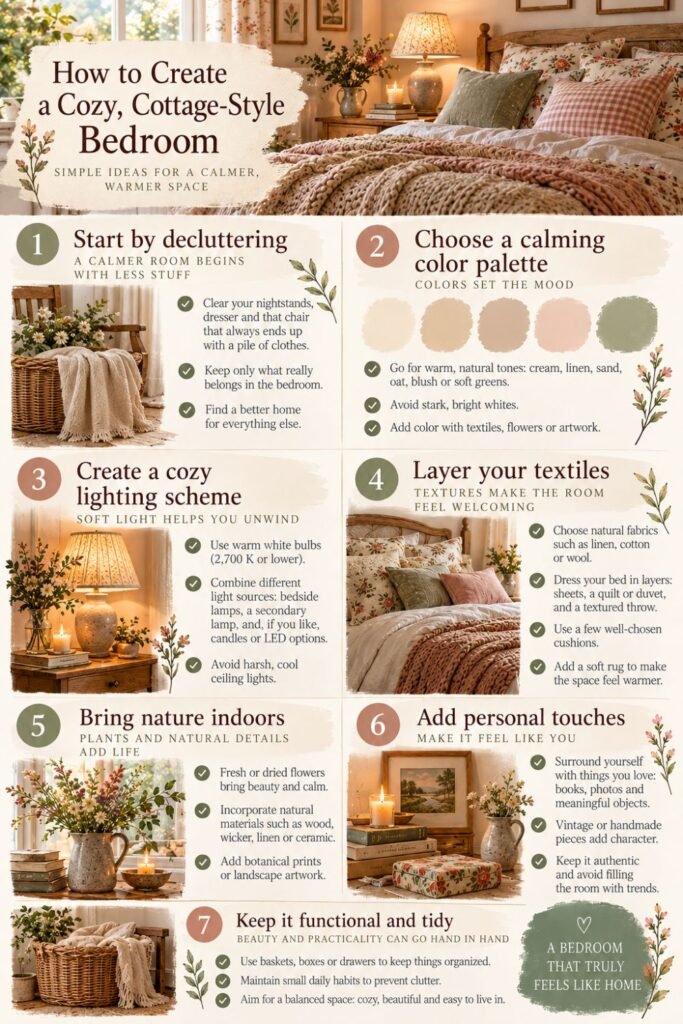
Steps to turn your bedroom into a retreat
Frequently Asked Questions About Turning Your Bedroom Into a Retreat
What if my bedroom is small and dark?
The key is gaining brightness without losing warmth. Paint the walls cream or light sand instead of pure white, hang a mirror, ideally with a vintage frame, across from the window to multiply the light, and choose lightweight furniture with visible legs so the floor looks continuous. Avoid overloading the walls with oversized art or bulky shelves; a few small prints work much better.
Is it a good idea to have a TV in the bedroom?
For better sleep, the ideal answer is no. Screens emit blue light that interferes with melatonin production, and it helps if your brain associates the bedroom with calm rather than entertainment. If you do keep one, hide it inside a cabinet with doors, like an old armoire or a hutch, so it disappears at night.
How do I make my bed look fluffy and inviting?
Combine a good duvet insert with layers of textiles. Choose a medium- to high-weight comforter with plenty of loft, fold the top of the duvet down about twelve inches to let the sheets peek through, add a throw blanket or coverlet across the foot of the bed, and arrange several pillows of different sizes against the headboard.
What are the best curtains for a good night’s sleep?
If you need total darkness, go with two layers: a linen sheer to filter light during the day and, behind it, a roller blind or blackout curtain for nighttime, especially if your window doesn’t have exterior shutters.
Your Turn
Turning your bedroom into a warm, beautiful retreat with soul comes down to deciding, with care, how you want to feel in your most personal space. Look at what you have, clear away what doesn’t serve you, surround yourself with inviting textures, and pay attention to the light. The rest will come together little by little, the way a garden grows.
I’d love to know where you’re going to start. Is there a corner of your bedroom that’s been giving you trouble, or are you unsure about how to mix colors and fabrics in your space? Drop me a comment below and let’s talk about it.